Before you enter a credit card number, click a link from a text message, or trust a site you’ve never heard of, it’s worth running one simple check. A good website checker can tell you in seconds whether a site is safe to use or a red flag waiting to happen.
This guide explains exactly how website checkers work, which signals actually matter, and how to manually verify a site yourself if you’d rather not rely on a tool at all. By the end, you’ll know how to check a website’s safety with confidence — no technical background required.
Table of Contents
What Is a Website Checker?
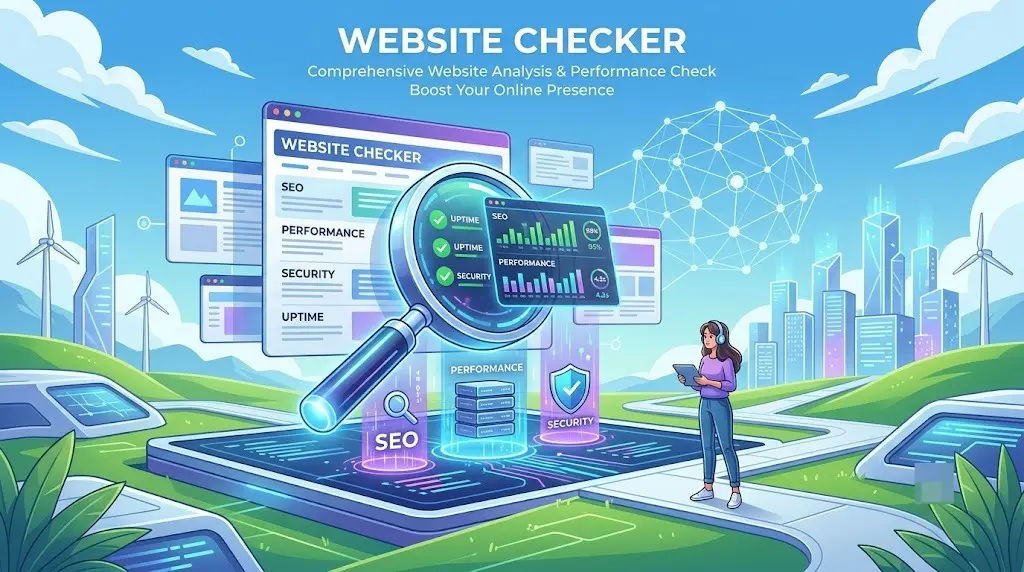
A website checker is a free online tool that scans a URL and reports back on whether the site is likely safe, suspicious, or outright dangerous. Instead of you manually digging through domain records, security certificates, and blacklists one by one, the tool pulls that data together automatically and gives you a simple result.
Most website safety checkers look at a combination of:
- Domain age and registration history — brand-new domains carry more risk.
- SSL/HTTPS status — whether the connection to the site is encrypted.
- Blacklist status — whether security databases like Google Safe Browsing have flagged the site for malware or phishing.
- Reputation and reports — whether other users or security researchers have reported the site as fraudulent.
- Hosting and server details — where the site is hosted and whether that hosting pattern matches known scam infrastructure.
None of these signals alone proves a site is safe or dangerous. Together, they build a much clearer picture than eyeballing a homepage.
How to Use a Website Checker (Step by Step)
- Copy the exact URL of the site you want to check, rather than typing it from memory — small misspellings matter.
- Paste it into a reputable checker tool. Popular free options include Google’s Safe Browsing site status page, VirusTotal, and IONOS’s website checker.
- Review the SSL and blacklist results first. These are the fastest indicators of an active security problem.
- Check the domain age and WHOIS data, if the tool provides it. A domain registered days ago selling “too good to be true” deals is a major warning sign.
- Read the summary or trust score, but don’t treat it as absolute. Combine it with your own judgment before entering any personal or payment information.
Free Website Checker Tools Worth Knowing
| Tool | Best For | What It Checks |
| Google Safe Browsing Transparency Report | Quick malware/phishing check | Whether Google has flagged the site as dangerous |
| VirusTotal | Deeper security scan | Cross-checks the URL against 70+ antivirus and blacklist engines |
| IONOS Website Checker | Technical + SEO health | SSL, load speed, mobile-friendliness, and basic security |
| WHOIS Lookup | Domain ownership | Registration date, registrant details, and domain history |
| URLVoid | Reputation scanning | IP reputation, hosting location, and prior malicious activity reports |
No single tool catches everything. Using two — one for security scanning and one for domain/WHOIS data — gives a far more reliable read than relying on just one report.
How to Tell if a Website Is Legit Without a Tool
Sometimes you just need a fast gut-check without opening a separate tool. Here’s what to look for directly on the site itself.
Check the URL Structure
Scammers often mimic real brands using URLs that look almost right but aren’t. Learn to read a URL properly, and you’ll spot these tricks much faster. Pay close attention to:
- The domain name itself — is it spelled exactly like the real brand, or is a letter swapped (“arnazon.com” instead of “amazon.com”)?
- Extra words before the domain. A URL like amazon.security-verify.com is not actually part of Amazon — security-verify.com is the real root domain, and amazon is just a misleading prefix. Understanding the difference between a root domain and a subdomain makes this kind of trick much easier to catch.
- The protocol. Look for https://, not http://. Our breakdown of the parts of a URL explained shows exactly where this sits in a web address and why it matters.
Look for HTTPS and a Valid Certificate
A padlock icon next to the address bar means the connection is encrypted — but it does not guarantee the site is trustworthy. Scammers can and do buy valid SSL certificates for fake sites. Treat HTTPS as a minimum requirement, not proof of legitimacy.
Check Domain Age
Newly registered domains are disproportionately used for scams because they’re cheap, disposable, and easy to abandon once flagged. A WHOIS lookup will show you the registration date. If a “10-year established company” has a domain registered three weeks ago, that mismatch is worth taking seriously.
Search for Independent Reviews
Search the brand name plus words like “scam,” “reviews,” or “complaints” on Google. Genuine businesses accumulate a trail of reviews across multiple independent platforms over time. A total absence of any outside mentions is itself a signal.
Check Contact Information
Legitimate businesses list a real physical address, a working phone number, or a verifiable email address. If the only way to reach a company is a contact form with no other details, be cautious.
Review the Payment Options
Be wary of sites that only accept irreversible payment methods like wire transfers, gift cards, or cryptocurrency for retail purchases. Legitimate ecommerce sites almost always support standard, traceable payment methods with buyer protection, like major credit cards.
Common Red Flags a Website Checker Will Catch
- The site is flagged on Google Safe Browsing or similar blacklists.
- The SSL certificate is missing, expired, or mismatched with the domain.
- The domain was registered very recently despite claims of being an established business.
- The hosting location or server pattern matches known scam infrastructure.
- There’s no verifiable ownership information in WHOIS records.
Common Mistakes People Make When Checking a Website
- Trusting HTTPS alone. As noted above, encryption protects your connection, not the site’s intentions.
- Judging legitimacy by design quality. Scam sites can look polished; legitimate small businesses sometimes have rougher, dated designs. Visual quality is not a reliable signal on its own.
- Only checking one source. A single tool can miss something another catches — cross-reference at least two.
- Ignoring subtle URL differences. Extra hyphens, swapped letters, or unfamiliar domain extensions are among the most common scam tactics and the easiest to miss if you’re skimming.
- Skipping the check because a link came from someone they trust. Compromised accounts and forwarded scam links are common — verify the destination site regardless of the source.
Website Checker Best Practices
- Always check a URL before clicking, not after entering information on the page.
- Bookmark trusted sites directly instead of relying on search results or links in emails.
- Re-check unfamiliar sites periodically — a site that was safe last month can be compromised later.
- When in doubt about a specific brand’s real domain, search for it directly rather than clicking a link from an email, text, or ad.
- For businesses you’re evaluating as a customer, cross-check domain ownership using a WHOIS lookup alongside a security scan.
Frequently Asked Questions
Is this website safe? How can I check quickly? Paste the URL into a free tool like Google’s Safe Browsing Transparency Report or VirusTotal. Both will tell you within seconds if the site has been flagged for malware, phishing, or other threats.
How do I know if a website is legit before buying something? Check for HTTPS, look up the domain’s registration date, search for independent reviews, and confirm the site lists real contact information. If several of these checks raise concerns, it’s safer to avoid the purchase.
Are free website safety checkers accurate? They’re a strong first filter but not infallible. Sophisticated scammers sometimes use aged domains and valid SSL certificates specifically to score well on automated checks. Combine tool results with your own judgment.
What does it mean if a website checker shows a low trust score? A low score usually reflects multiple negative signals at once — like blacklist flags, a very new domain, or missing ownership information. Treat it as a strong warning to investigate further before interacting with the site.
Can a website be safe even without HTTPS? Technically the content could be harmless, but any site handling personal information, logins, or payments without HTTPS should be avoided. Unencrypted connections expose your data to interception.
What’s the difference between a website checker and an antivirus scan? A website checker evaluates the site itself — its domain, certificate, and reputation — before you visit. Antivirus software protects your device after you’re already browsing. Using both gives layered protection.
Final Thoughts
A reliable website checker turns guesswork into a quick, evidence-based decision. Running a URL through a security scanner, glancing at its domain age, and confirming a valid SSL certificate takes less than a minute and can save you from a scam that costs far more than that in time, money, or stolen data.
When a tool isn’t available, the manual signals — domain spelling, HTTPS, contact details, and independent reviews — will get you most of the way to a confident answer on your own.