
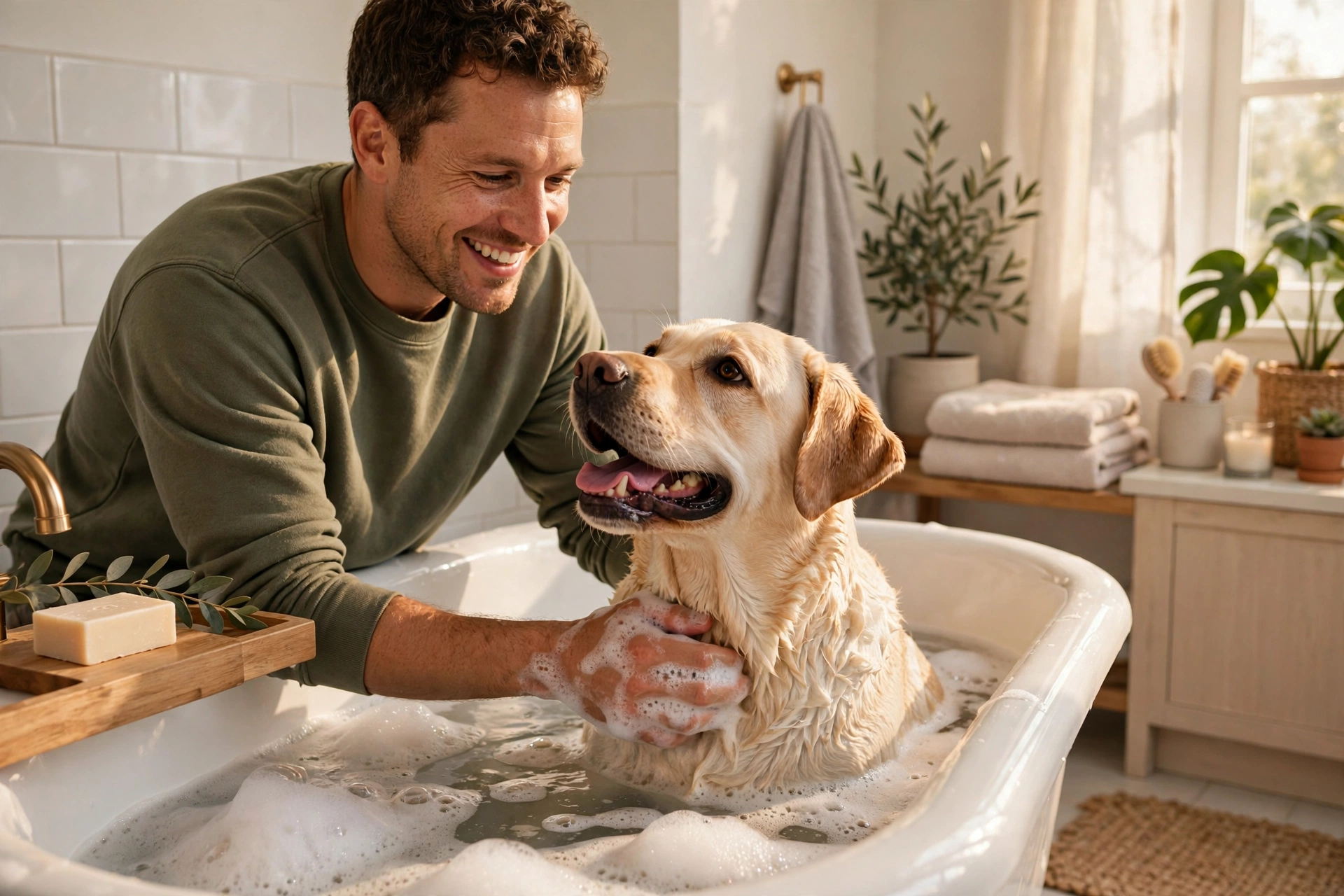
Bath time does not have to be a wrestling match. With the right setup and a calm approach, bathing your dog at home can be quick, easy, and even enjoyable for both of you. Doing it yourself also saves money and lets you keep your dog’s coat clean on your own schedule. Whether this is your first bath or your fiftieth, this step-by-step guide will walk you through the whole process.
What You’ll Need Before You Start
Gathering everything first is the secret to a stress-free bath. A wet dog loose in the house while you hunt for a towel is nobody’s idea of fun. Here is your basic kit:
- Dog shampoo: Use a shampoo made for dogs, not human shampoo, which can dry out their skin. An oatmeal-based formula is a gentle choice for most dogs.
- Towels: Keep two or three large towels within arm’s reach. One for the first big dry-off, and spares for the rest.
- A non-slip mat: Place one in the tub or shower so your dog feels steady on their feet. A nervous dog on a slippery surface will panic fast.
- A cup or handheld sprayer: For wetting and rinsing. A detachable shower head on a gentle setting works best.
- Cotton balls: Gently placed in the ears to keep water out. Just remember to remove them when you are done.
- Treats: Small rewards throughout the bath build a positive association and keep your dog cooperating.
- A brush: For a quick brush-out before and after the bath, which prevents tangles from tightening when wet.
Step-by-Step: How to Bathe Your Dog
Step 1: Brush first. Give your dog a thorough brush-out before any water touches them. This removes loose fur and works through tangles, which get much worse when wet. For long-haired dogs, this step is not optional.
Step 2: Set the water temperature. Use lukewarm water, comfortable on the inside of your wrist. Water that feels fine to you can feel hot to a dog, so err on the cooler side. Test the spray on your own arm before aiming it at your dog.
Step 3: Wet your dog completely. Starting at the neck and working toward the tail, soak the coat all the way down to the skin. Avoid spraying directly into the face and ears. For the head, use a damp washcloth instead of the sprayer.
Step 4: Apply the shampoo. Squeeze a line of dog shampoo along your dog’s back and work it into a lather with your fingers, massaging gently in circles. Many dogs actually enjoy this part. Work from neck to tail, then do the legs, belly, and paws. Save the head for last, using only a small amount and keeping it away from the eyes.
Step 5: Rinse, rinse, rinse. This is the step most people rush, and it matters more than you think. Leftover shampoo can irritate the skin and make the coat look dull. Rinse until the water runs completely clear and the coat feels squeaky rather than slippery. When you think you are done, rinse once more.
Step 6: Dry thoroughly. Start with a towel, pressing rather than rubbing to soak up water. Most dogs will do a full-body shake at this point, so stand back. For long or thick coats, follow up with a second towel. If you use a hair dryer, keep it on the lowest heat setting, hold it well away from the skin, and keep it moving so no one spot gets too warm.
Step 7: Brush again and reward. Once the coat is mostly dry, give it a final brush to prevent tangles and leave the coat smooth. Finish with praise and a treat so your dog ends bath time on a happy note.
Tips for Nervous Dogs
Some dogs dread the bath, and forcing the issue only makes it worse. If your dog is anxious, try shorter sessions: just the paws one day, a quick rinse the next. Smear a little peanut butter on the tub wall to give them something pleasant to focus on. Keep your own energy calm and cheerful, since dogs read your mood closely. Never punish a scared dog during a bath. Patience now means easier baths for years to come.
How Often Should You Bathe Your Dog?
Most dogs do fine with a bath every four to eight weeks, but the right schedule depends on the dog. Active outdoor dogs and hairless or wrinkly breeds may need more frequent baths, while indoor dogs with healthy coats can go longer. Bathing too often strips natural oils and can cause dry, itchy skin. If your dog starts smelling between baths, try a waterless foam or a simple wipe-down instead of a full bath.
After the Bath: Keeping the Coat Fresh
A good bath lasts longer with a little maintenance. Brush your dog a few times a week to spread natural oils and catch loose fur before it mats. Keep ears clean and dry, especially for floppy-eared breeds, since moisture trapped in the ear can lead to irritation. And keep up with nail trims and dental care, because grooming is a whole package. A clean dog is a comfortable dog, and a comfortable dog is a happy one.
Final Thoughts
Bathing your dog at home is a skill that gets easier every time. The first bath might be chaotic, the fifth will be routine, and by the tenth your dog may walk into the bathroom on their own. Take it slow, keep treats handy, and remember that a calm, gentle bath beats a rushed, stressful one every time.
Leave a Reply