
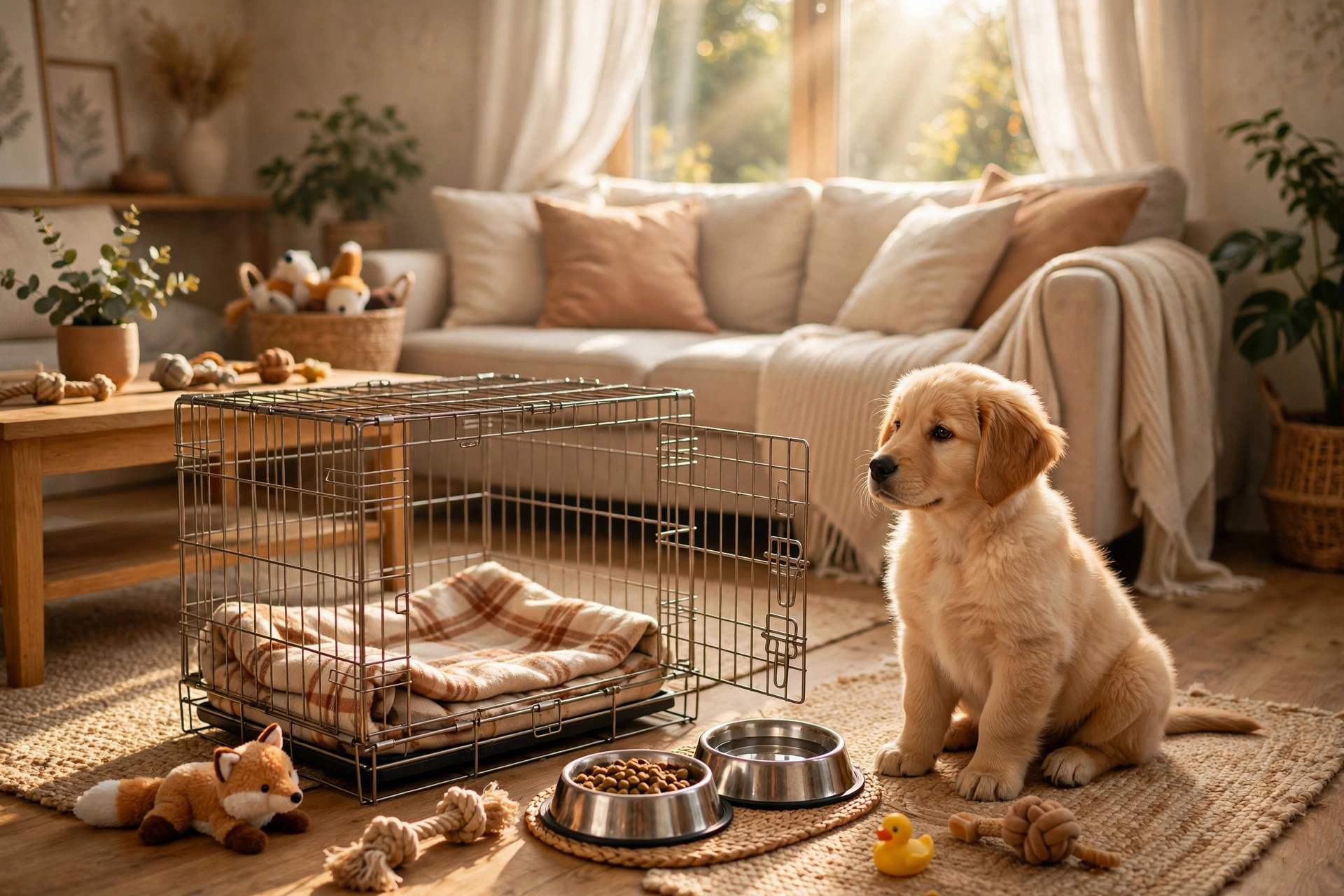
Bringing home a puppy is pure joy — and a little bit of chaos. The first week with a new puppy goes so much smoother when the house is already set up and you are not making panicked pet-store runs at 10 p.m. This checklist covers the 15 essentials every first-time puppy owner needs before (or right after) that big homecoming day.
Feeding and Nutrition Basics
1. Puppy-specific food
Puppies need more calories, protein, and nutrients than adult dogs to fuel their rapid growth. Buy a quality puppy-formula food — and here is a tip most new owners miss: ask the breeder or shelter what the puppy is currently eating. Switch foods gradually over a week (mixing old and new in changing ratios) to avoid an upset stomach.
2. Food and water bowls
Stainless steel bowls are the best all-around choice: they do not harbor bacteria like scratched plastic, they are heavy enough that puppies cannot flip them, and they are dishwasher-safe. Get a medium water bowl and a food bowl sized for your puppy’s breed. Wash them daily.
3. Training treats
Tiny, soft, smelly treats are training gold. Keep a pouch on you during the first weeks — you will reward your puppy dozens of times a day for good behavior, and small treats keep the calorie count reasonable. Break larger treats into pea-sized pieces.
Sleep, Safety, and Comfort
4. A properly sized crate
A crate is your puppy’s bedroom, not a punishment box. Choose one your puppy can stand up, turn around, and lie down in comfortably — but not so big that one end becomes a bathroom. Many crates come with a divider panel so the crate can grow with your puppy. Introduce it with treats and meals inside so it feels like the best spot in the house.
5. A cozy bed or blanket
Even with a crate, a soft bed gives your puppy a defined “place” to settle. Washable is the operative word — accidents happen. Pick something inexpensive for the first months; you can upgrade once house training is solid.
6. Puppy-proofing supplies
Before your puppy arrives, get down on your hands and knees and look at your home from puppy height. Secure loose cords, move toxic plants out of reach, lock away cleaning chemicals and medications, and pick up small objects. Baby gates are worth their weight in gold for blocking off-limits rooms and staircases.
7. ID tag and collar
Even if your puppy will be microchipped (and should be), a collar with an ID tag is the fastest way home if your puppy slips out. Use a lightweight, adjustable flat collar — puppies grow fast, so check the fit weekly. You should be able to slip two fingers underneath comfortably.
Health and Grooming
8. A vet appointment — booked in advance
Do not wait until something looks wrong. Schedule a wellness visit within the first few days of bringing your puppy home. Your vet will check overall health, start or continue the vaccination schedule, discuss parasite prevention, and answer your questions. Bring any health records from the breeder or shelter.
9. Puppy shampoo and basic grooming tools
A gentle puppy-formula shampoo, a soft brush suited to your puppy’s coat type, and nail clippers (or a grinder) cover the basics. Start handling your puppy’s paws, ears, and mouth early with treats involved — it makes lifelong grooming and vet visits dramatically easier.
10. Enzyme-based stain cleaner
House-training accidents are a when, not an if. Regular cleaners mask odors to human noses but not to puppy noses, and lingering scent invites repeat offenses in the same spot. An enzyme cleaner actually breaks down the odor-causing proteins. Buy it before you need it — you will need it.
Training and Enrichment
11. A 6-foot leash (not retractable)
A standard 6-foot leash gives you control and teaches your puppy that leash tension has limits. Retractable leashes reward pulling and are a poor choice for training. Pair the leash with the flat collar above for everyday walks.
12. Age-appropriate toys
Puppies explore the world with their mouths, so give them legal things to chew. A mix works best: a soft plush for comfort, a rubber chew toy you can stuff with treats, and a rope toy for interactive play. Rotate toys every few days to keep them interesting. Always supervise with new toys and remove anything that starts coming apart.
13. Puzzle feeder or slow-feed bowl
Mental exercise tires a puppy out faster than physical exercise. A simple puzzle feeder or snuffle mat turns mealtime into a brain game and slows down speed-eaters. Start easy — a frustrated puppy gives up, so make the first puzzles almost too simple.
The Often-Forgotten Essentials
14. Poop bags (lots of them)
It sounds obvious until you are on a walk with none. Keep rolls by the door, in your jacket pocket, and in the car. Being the responsible owner who always cleans up also keeps you on good terms with every neighbor on the block.
15. A plan for the first 48 hours
The most essential item is not a product at all — it is a plan. Decide in advance where the puppy will sleep, who handles middle-of-the-night potty breaks, what the feeding schedule is, and which house-training method you will use. Puppies thrive on consistency, and a household that agrees on the rules from day one avoids weeks of confusion.
Bringing home a puppy is a big commitment wrapped in a small, wiggly package. Get these 15 essentials in place, keep your expectations realistic for the first month, and you will set the foundation for a lifetime of good habits — and a very good dog.