
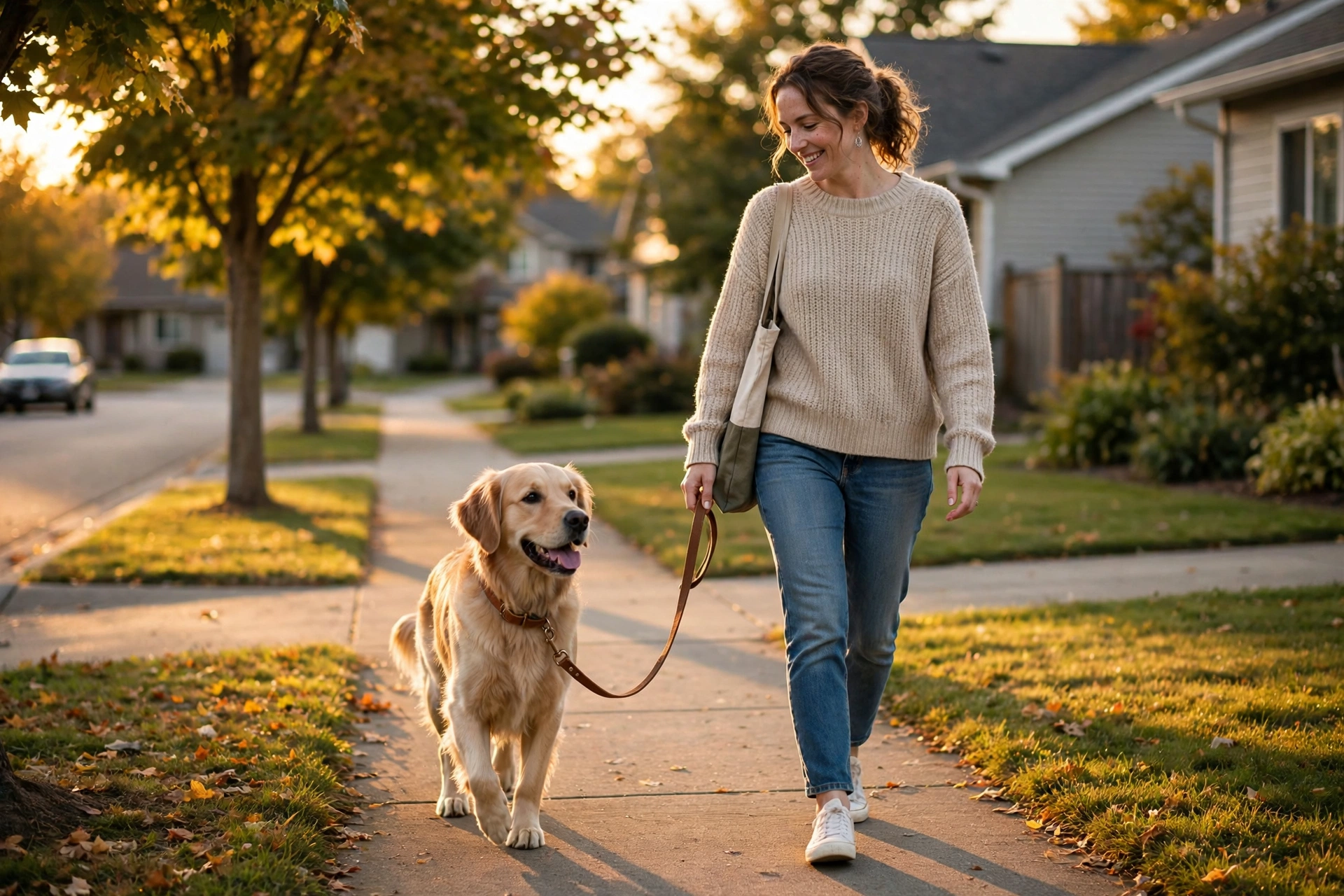
Walking your dog should be one of the best parts of your day — not an arm-wrenching tug of war. If your dog drags you down the sidewalk, lunges at squirrels, or turns every walk into a workout, you are not alone. Leash pulling is one of the most common complaints dog owners have, and the good news is that it is completely fixable with patience and the right approach.
The key thing to understand is that pulling works for dogs. Every time your dog pulls forward and you follow, the leash becomes a reward dispenser: pull, move forward, sniff that interesting bush. From your dog’s point of view, pulling is a brilliant strategy. Your job is to teach a better one — that walking calmly on a loose leash is what makes good things happen.
Why Dogs Pull (And Why Yanking Back Does Not Work)
Dogs pull because the world is exciting and they want to get to it faster. They are not being stubborn or dominant. They are simply doing what has always worked. When you yank the leash or shout, you add tension and excitement to the situation, which usually makes the pulling worse. A tight leash actually triggers an opposition reflex — the harder you pull back, the harder your dog pulls forward. It is basic physics and instinct, not disobedience.
Equipment matters too. A standard flat collar on a strong puller can strain your dog’s neck, and a back-clip harness can make pulling feel comfortable, like a sled dog. A well-fitted front-clip harness or a head halter (introduced gradually with treats) can give you better leverage while you train. But gear is only a management tool — the real fix is training.
The Stop-and-Go Method: Your Foundation Drill
This is the simplest and most effective loose-leash exercise, and you can start it today in your own driveway or a quiet street.
How to practice
- Start walking. The moment the leash goes tight, stop dead. Become a tree. Do not say anything, do not yank — just freeze.
- Wait for slack. Your dog will eventually look back, step toward you, or shift position, loosening the leash. The instant there is slack, praise warmly and start walking again.
- Reward position. Keep a few small treats in your pocket. Every few steps where your dog walks beside you with a loose leash, mark it with a cheerful “yes” and deliver a treat at your side, not out in front.
- Keep sessions short. Five to ten minutes is plenty. End while your dog is still succeeding.
The first few walks will feel slow — you may only make it half a block. That is normal and actually a sign it is working. Your dog is learning a brand-new rule: tension stops the walk, slack restarts it. Most dogs show real improvement within two to three weeks of consistent practice.
Change Direction to Build Attention
If your dog is a chronic lunger who charges ahead the second you move, add the direction-change game. Walk forward, and the moment your dog surges past you, cheerfully turn and walk the other way. When your dog catches up and the leash loosens, praise and keep going. You will look a little silly zigzagging down the street, but your dog quickly learns that the fun happens near you, not twenty feet ahead.
This drill also rebuilds your dog’s focus on you instead of the environment. Pair it with a name-recognition habit: say your dog’s name, and when those eyes flick to you, reward. A dog that checks in with you voluntarily is a dog that is easy to walk.
Set Your Dog Up for Success
Training works fastest when you control the difficulty. A dog that has been cooped up all day is a coiled spring — no amount of treat-bribing will beat a full bladder and pent-up energy. A short game of fetch or ten minutes of play before a training walk takes the edge off and lets your dog actually think.
Choose your training grounds wisely. A quiet residential street is a classroom; a busy park full of dogs and food smells is a final exam. Start where your dog can succeed and only raise the difficulty when loose-leash walking feels easy in the current spot. And keep your own energy calm — loose shoulders, relaxed leash hand, steady pace. Dogs mirror our tension.
Stay consistent with everyone who walks the dog. If you practice stop-and-go but a family member lets the dog drag them to the park, your dog learns that pulling sometimes works — and “sometimes” is the most powerful reward schedule there is. Get the whole household on the same page.
What to Avoid
- Choke chains and prong collars as a first resort. They suppress pulling through discomfort without teaching the dog what to do instead, and they can cause injury and fear.
- Retractable leashes for training. They teach your dog that pulling extends the leash — the exact opposite of what you want.
- Marathon sessions. Long, frustrating walks sour both of you. Short and successful beats long and miserable.
Loose-leash walking is not about having a robot dog glued to your leg. It is about a relaxed partnership where the leash hangs in a soft “J” shape and you both enjoy the walk. With a few weeks of patient, reward-based practice, those daily battles will turn into the highlight of your day — for both of you.
Leave a Reply